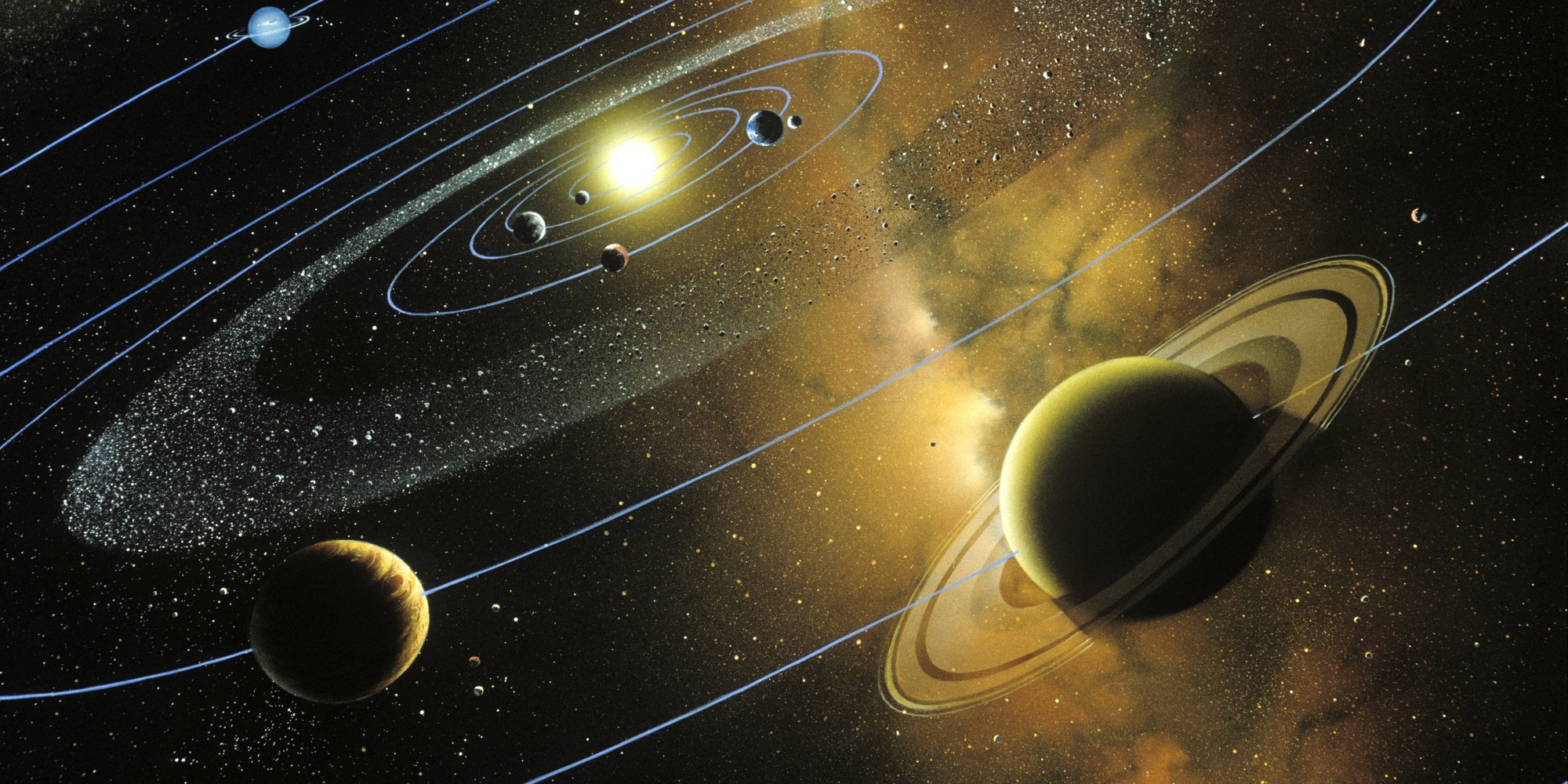
Mercury will cross the Sun's diameter on May 9th marking a rare celestial event, which only happens a few times throughout the century.
Next Monday (May 9), a stellar event will take place: the transit of Mercury crossing over the sun, which only happens only 13 or 14 times a century. Mercury is closer to the sun than Earth is and occasionally passes between Earth and the sun called a solar transit. Venus also performs the same event, which happens less than twice a century.
The journey lasts throughout the day, approximately 7 hours, so it will be visible in most regions except for Australia, New Zealand, Indonesia, the Philippines and a small section of eastern Asia. But those on the Northeastern Coast of the U.S. will have the opportunity to witness the entire crossing while spectators on the West Coast will miss most of it because of the rising sun.
The event is recorded to begin after 7 a.m. EDT (1100 GMT) and ends just before 3 p.m. EDT (1900 GMT) and begins at sunrise ending around 11:30 PDT (0230 EDT; 0630 GMT on May 10) on the West Coast.
But viewers must focus their attention on a specific area of the sun, what astronomers call “first contact.” The second event is when Mercury crosses the sun’s disk. At this occurrence, viewers may see an optical illusion called the “black drop effect,” which causes Mercury—a small black button compared to the sun’s massive yellow diameter—to look connected to the silhouette of space surrounding it.
The black drop effect, however, may be visible at third contact when Mercury finishes its trek 7.5 hours later; at fourth contact, Mercury has completely slid across the sun’s plane.
But sky gazers will need a quality telescope fitted with a proper solar filter because Mercury is only 1/160 of the sun’s size. Alternatively, bystanders can capture the event through a public source. The complete report can be found on Space.com.


Leave a Reply